
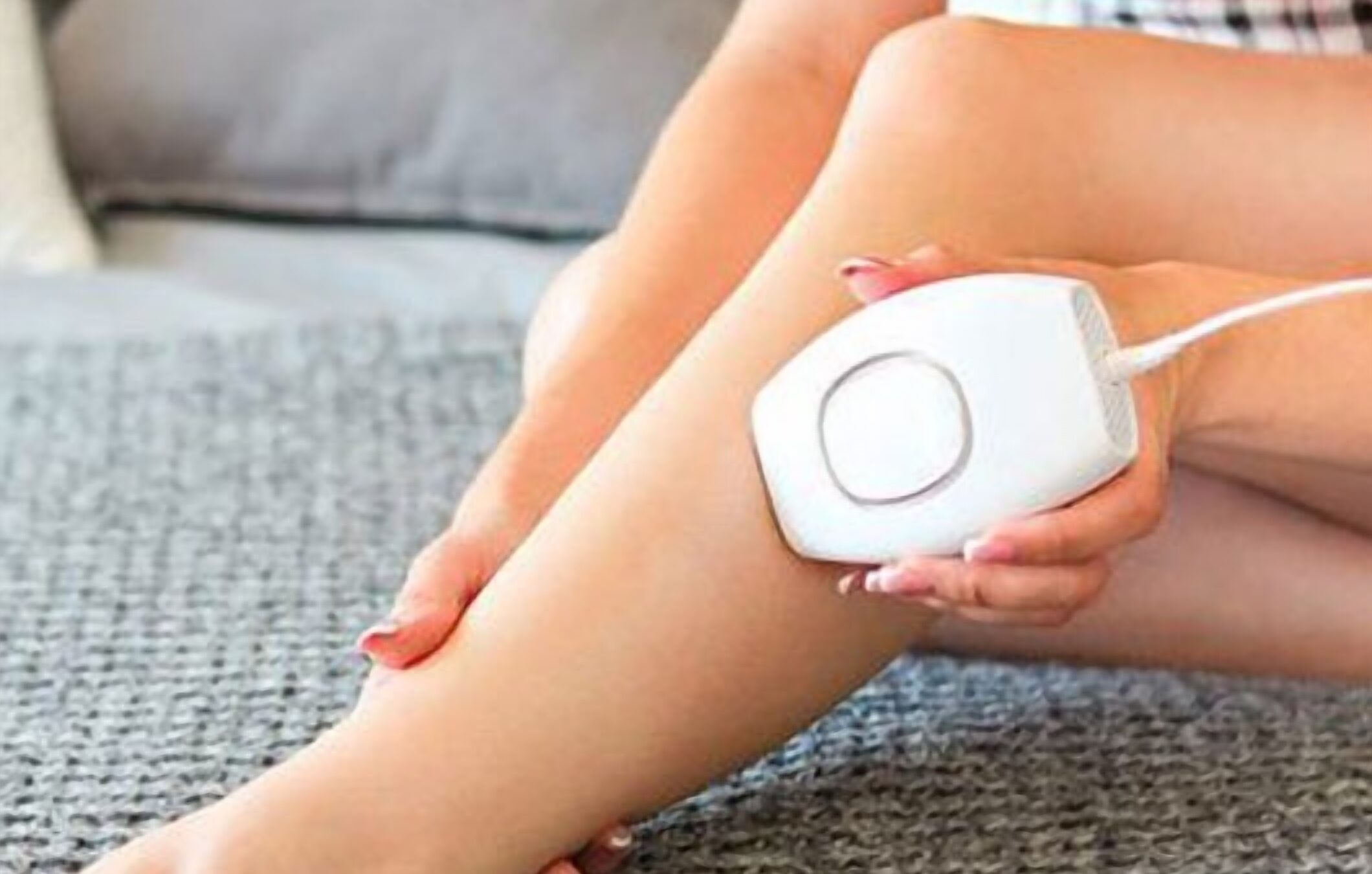
You bought the IPL handset. You did the research, you read the reviews, you followed the schedule. Maybe you’ve seen some results. Maybe you haven’t. Either way, you’re starting to wonder whether what you’re doing at home is actually working or whether a professional treatment would get you there faster. As more Australians explore at-home skin devices, it’s a fair question to ask, and one worth answering clearly.
Alana Van Der Schouw, Head of Education at Clear Skincare, Australian Skin Clinics and SILK Laser Clinics, has had this conversation thousands of times. The appeal of at-home devices, she says, is completely understandable: people want the convenience of managing their skin and hair on their own terms, without relying on appointments at skin clinics. That desire is legitimate.
What’s worth understanding is where that convenience has a ceiling. This isn’t an argument against devices. It’s a clear-eyed look at what they can and can’t do, so you can make a decision that’s right for your skin and your goals.
At-Home Skin Devices vs Professional Treatments: Why the Gap Exists
The at-home beauty device market is built on a simple promise: clinic-quality results, on your own schedule, at a fraction of the cost. It’s a compelling pitch. For a narrow group of people, with the right skin type, hair colour, and consistent use over many months, it delivers partial results. For most people, it delivers less than they were hoping for.
But the reason many people find themselves questioning their device after a few months isn’t that they used it wrong. It’s because at-home devices and professional skin treatments are genuinely different classes of technology. They’re not the same tool in different form factors. They work at different depths, operate at different intensities, and the at-home version is used without anyone assessing whether it’s appropriate for your skin specifically.
Consumer devices are designed to a broad safety standard, one that works for anyone using them unsupervised. But that also means they’re not designed for you. They’re designed for everyone. The difference between those two things is where the results diverge.
IPL Devices and Laser Hair Removal
The goal for most people buying an at-home IPL device is simple: a permanent, low-maintenance hair removal treatment. IPL can move you in that direction, but it’s worth understanding how far it can realistically take you.
At-home IPL works by emitting broad-spectrum, scattered light. It’s not the same as the single-wavelength, precisely targeted energy used in a professional Laser Hair Removal treatment. For people with fair to medium skin tones and dark hair, consistent use over several months can produce a meaningful reduction. But the marketing tends to promise total clearance, which is a different outcome from what most devices deliver.
How professional Laser Hair Removal gets further
Professional laser hair removal is timed to your hair’s individual growth cycle, specifically the anagen phase when each follicle is most vulnerable to treatment. At-home devices run on a universal schedule developed by the manufacturer. Your hair doesn’t.
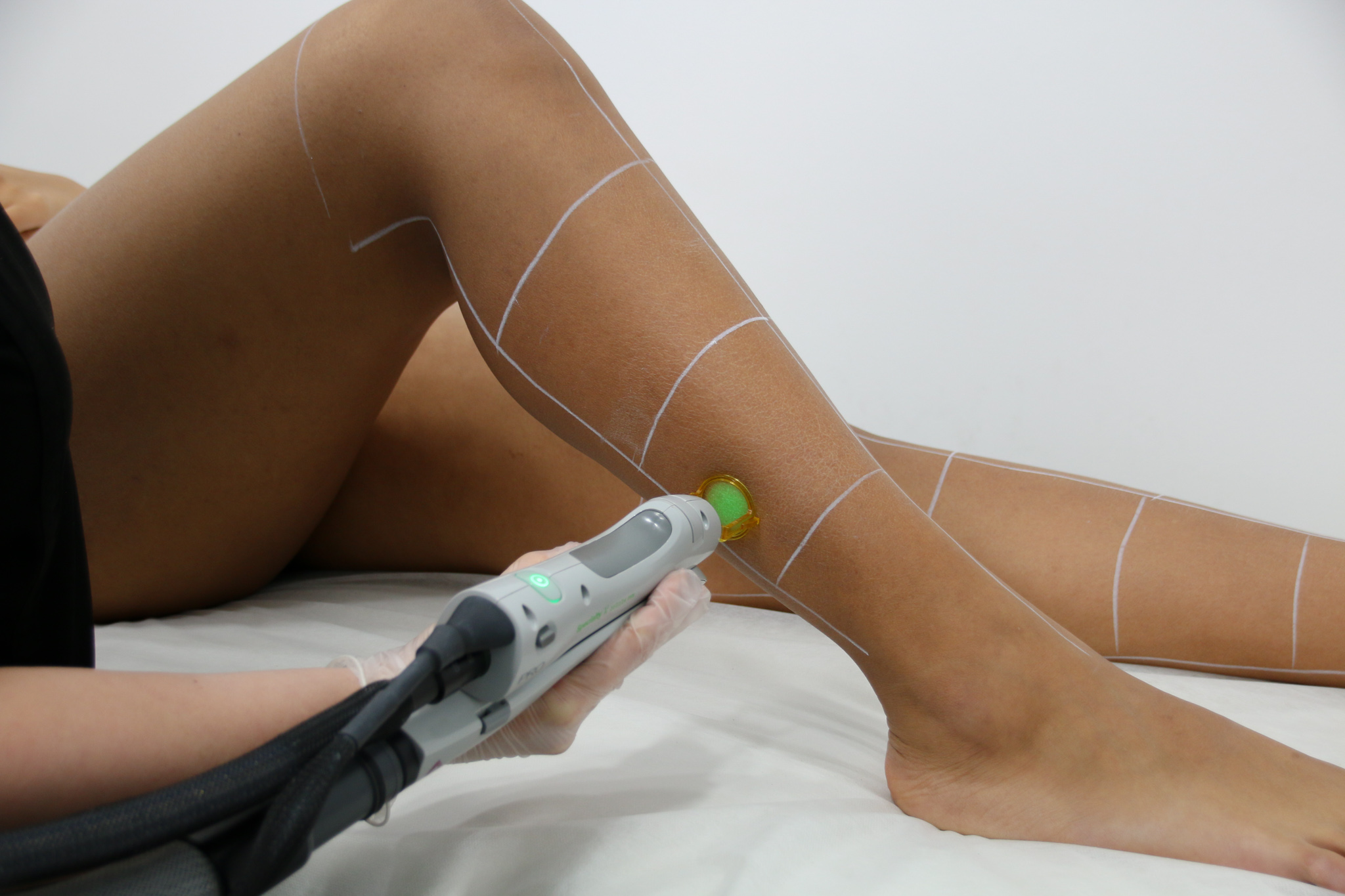
As Alana notes, “at-home devices are less powerful than professional lasers and work more slowly. They cannot guarantee permanent results or treat all skin types safely.” Without a practitioner calibrating each session to your skin, results are less predictable and harder to sustain over time.
Cost is worth considering, too. Devices range from around $100 to nearly $1,000. Without a clinical assessment, there’s no reliable way to know whether the device will work effectively on your specific combination of skin tone and hair colour before you’ve committed to it.
The safety considerations worth knowing
Because at-home IPL depends on the contrast between hair pigment and skin tone, it isn’t suitable for all skin types. Using it on the wrong skin or hair colour carries real, documented risks.
The most commonly reported side effects from at-home IPL misuse are:
- Hyperpigmentation — uneven darkening that can be stubborn to treat
- Burns and skin irritation — particularly on skin tones the device wasn’t calibrated for
- Eye injury — from use too close to the eye area without adequate protection
Before any professional Laser Hair Removal session, a clinician assesses your skin tone, hair colour, and any contraindications. That assessment is what makes the treatment safe and effective for your skin.
Microneedling Rollers and Professional Microneedling
Many people turn to at-home rolling to improve acne scarring, uneven texture or rough skin. Professional microneedling is often used for similar concerns, but the key difference is depth. The changes you’re hoping to see usually start below the surface, in layers that most at-home devices simply aren’t designed to reach.
At-home rollers typically operate at 0.1–0.3 mm, keeping treatment at the skin’s surface. This is useful for helping your serums absorb more effectively.
Professional microneedling treatments reach depths of 0.5–1.5 mm into the dermis, where collagen and elastin are produced and where the skin’s healing response is actually triggered. A clinician chooses the exact depth based on your skin and what you’re targeting. That assessment doesn’t exist with a home device.
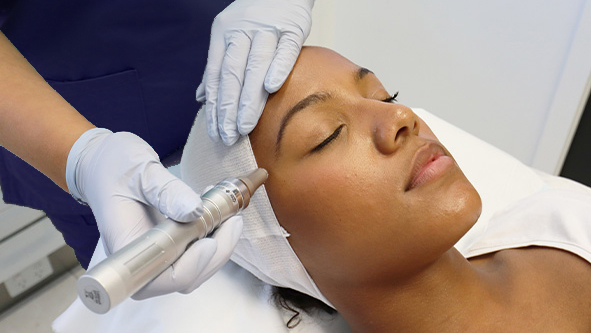
If you’re using a home roller to help your serums spread and absorb more effectively, it can make sense as part of your routine. But if you’re hoping to improve the appearance of scarring or more noticeable texture changes, depth matters. Those concerns usually need a more targeted approach than at-home devices are designed to provide.
Why clinical microneedling is a regulated treatment
A clinical setting eliminates risks that are easy to underestimate at home:
- Infection. Needles that aren’t properly sterilised between sessions introduce bacteria into deliberately punctured skin.
- Skin damage. Low-grade needles tear rather than puncture cleanly, triggering inflammation rather than the controlled healing response the treatment relies on.
- Proceeding when you shouldn’t. Active acne, rosacea, and other conditions are contraindications. A device has no way to identify them. A clinician does, before the treatment starts.
Facial Devices and the HydraFacial
Facial cleansing devices, exfoliating brushes, and at-home peeling tools have a legitimate place in a skincare routine. Used consistently, they can improve product absorption, manage surface congestion, and keep skin feeling clean and fresh between professional treatments. For maintenance, they’re a reasonable investment.
Where they fall short is in the depth of what they can actually deliver. They work at the skin’s surface. The ingredients in your serums stay largely topical. And because there’s no assessment of your skin type, concern, or condition, every session is identical regardless of what your skin actually needs that day.
What a HydraFacial does differently
The HydraFacial is one of the most popular professional facial treatments at Clear Skincare, and no home device comes close to replicating it. It works in three clinical stages: a deep cleanse, exfoliation, and a direct infusion of hydrating serums into the skin using a vortex tip. Each stage is performed by a qualified therapist who adjusts the approach to your skin on the day.
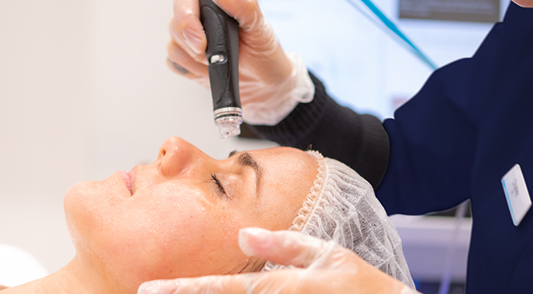
The result is visible before you leave the room. Skin that’s clearer, smoother, and more hydrated than when you arrived. It suits every skin type, requires no downtime, and no at-home tool works at the same depth, with the same precision, or with that level of personalisation.
Why clinical skin treatments go further
Home tools are limited by what’s safe for unsupervised use. A HydraFacial uses clinical-grade equipment and active serums at concentrations that aren’t available over the counter. More importantly, a qualified skin therapist reads your skin before and during the treatment, making real-time decisions that no device can replicate.
For anyone who has been managing their skin with home tools and hasn’t seen the results they were hoping for, a HydraFacial is often the treatment that resets that expectation. Not because it’s dramatic, but because it shows you what your skin is actually capable of when it’s properly treated.
What Happens When a Clinician Is Involved
Every device you buy off the shelf is calibrated for the broadest possible range of users. There is no assessment, no intake, no one who has looked at your skin and decided this is right for you. That’s the fundamental difference between reaching for something at home and booking a professional appointment.
Convenience is real. But it comes at the cost of the power, personalisation, and efficiency that clinical equipment brings. A device works at fixed settings. A clinician works with your skin, adjusting in real time based on what they see and how you respond. That difference is where the outcomes diverge.
At Clear Skincare, every treatment is built around your skin health, not a general profile, and not a fixed device setting. Your plan can change as your skin does.
Pricing is transparent with no surprises. With clinics located across Australia, getting started is easier than most people expect. Walk in or book online in a few minutes.
So, Should You Ditch the Device?
For most people who are genuinely trying to change something about their skin, professional treatment gets there more reliably, more safely, and in less time.
If you’re not sure which applies to you, the most useful next step is a conversation with someone who knows skin. A skin consultation at Clear Skincare gives you an honest picture of what’s actually going on with your skin, what will genuinely make a difference for your specific concerns, and whether what you’re doing at home is working as hard as it could be. No pressure. Just clarity.
FAQs
I’ve been using an at-home IPL device consistently, and I’m not seeing the results I expected. What’s going on?
At-home IPL can be a little more complicated than the packaging makes it sound, because results depend on your skin tone, hair colour, hair growth cycle and how consistently the device is used. A skin consultation can help you understand what is the right fit for you or whether a more personalised in-clinic approach may be better suited to your goals.
Is professional microneedling worth it if I already use a roller at home?
At-home rollers and professional microneedling may sound similar, but they are designed to work very differently. If you’re looking beyond product absorption and hoping to improve the appearance of acne scarring, uneven texture or roughness, professional microneedling may be worth discussing during a skin consultation.
Can at-home devices cause long-term skin damage?
At-home devices can irritate the skin or compromise the skin barrier when they’re used too often, used incorrectly or used on skin they’re not suited to. If your skin feels sore, inflamed, unusually sensitive or slow to recover after using a device, it’s a good idea to pause and get professional advice before continuing.
I use facial cleansing tools at home. Is a HydraFacial worth it if I already have a routine?
A good home routine can do a lot for your skin, but in-clinic treatments are designed to work in a more targeted and personalised way. HydraFacial may be worth considering if your skin still feels congested, dull, dehydrated or uneven despite consistent cleansing and skincare at home.
How do I know whether a professional treatment is worth it for my specific skin concern?
The best place to start is with a skin consultation, because your skin type, sensitivity, routine and goals all play a role in what will actually suit you. A Clear Skincare therapist can assess your skin and guide you towards the most appropriate option, whether that’s professional treatment, a home routine adjustment or a combination of both.