





Your skin feels tight after cleansing. It looks a bit dull no matter what you put on it, and you’re pretty sure this happens every winter without fail. It does. Dull skin and tightness are the two most common complaints this time of year, no matter how good things looked back in summer, and it can take a few weeks before you actually notice either one’s started.
Why is my skin so dry in winter gets asked a lot, but it isn’t really one question. There’s a quick way to work out what’s actually happening underneath that tightness, and once you know, the fix looks completely different depending on the answer.
Why is my skin so dry in winter
Three things cause most of it, and none of them is things you can switch off for the season.
- Cold air holds less moisture than warm air, so it starts pulling moisture out of your skin the moment you step outside, sometimes within minutes on a particularly sharp morning
- Indoor heating dries the air just as much as the cold does, so there’s rarely a real break from it, even while you’re asleep with the heater running low overnight
- Hot showers strip away the natural oils that help your skin hold onto moisture in the first place, especially if the water’s hot enough to fog the mirror
None of this means your routine’s failing. Your winter skin barrier is just working with less this time of year, and it helps to know that before you start swapping products.
A quick way to tell which one you’ve got
Dry and dehydrated skin get talked about like they’re the same thing. They’re not, and the dehydrated vs dry skin difference changes what actually fixes it.
Shine is the easiest way to spot the difference. Dehydrated skin can still look shiny through the T-zone while feeling tight everywhere else, because dehydration is about water, not oil. Dry skin feels the same all over, since it’s genuinely making less oil, not just missing water.
Old pigmentation can look more obvious around this time of year too, once summer’s tan has faded and stopped hiding it. That’s a separate thing, worth a proper look on its own.
What if your skin’s never felt dry before
Dehydration doesn’t check what skin type you’ve got first. It shows up on oily skin just as easily as dry skin, and that catches a lot of people off guard the first time it happens to them.
If this is the first winter your skin’s felt like this, rule dehydration in before you assume your skin type’s changed overnight.
It’s easy to assume you’ve just started ageing badly, or that your skincare’s stopped working, when really your skin’s just holding less water than it used to for a completely separate reason. Ruling dehydration in or out early saves weeks of guessing with products that were never going to fix it.
A quick way to tell which one you’ve got
Dry and dehydrated skin get talked about like they’re the same thing. They’re not, and the dehydrated vs dry skin difference changes what actually fixes it.
Shine is the easiest way to spot the difference. Dehydrated skin can still look shiny through the T-zone while feeling tight everywhere else, because dehydration is about water, not oil. Dry skin feels the same all over, since it’s genuinely making less oil, not just missing water.
Old pigmentation can look more obvious around this time of year too, once summer’s tan has faded and stopped hiding it. That’s a separate thing, worth a proper look on its own.
What if your skin’s never felt dry before
Dehydration doesn’t check what skin type you’ve got first. It shows up on oily skin just as easily as dry skin, and that catches a lot of people off guard the first time it happens to them.
If this is the first winter your skin’s felt like this, rule dehydration in before you assume your skin type’s changed overnight.
It’s easy to assume you’ve just started ageing badly, or that your skincare’s stopped working, when really your skin’s just holding less water than it used to for a completely separate reason. Ruling dehydration in or out early saves weeks of guessing with products that were never going to fix it.
If it’s dry skin
Dry skin is a skin type. It doesn’t show up for winter and leave in spring, so the fix is about consistent support, not a quick save. A richer moisturiser matters here, and it’s worth cutting back on any actives that might be adding to the strain, especially strong exfoliating acids.
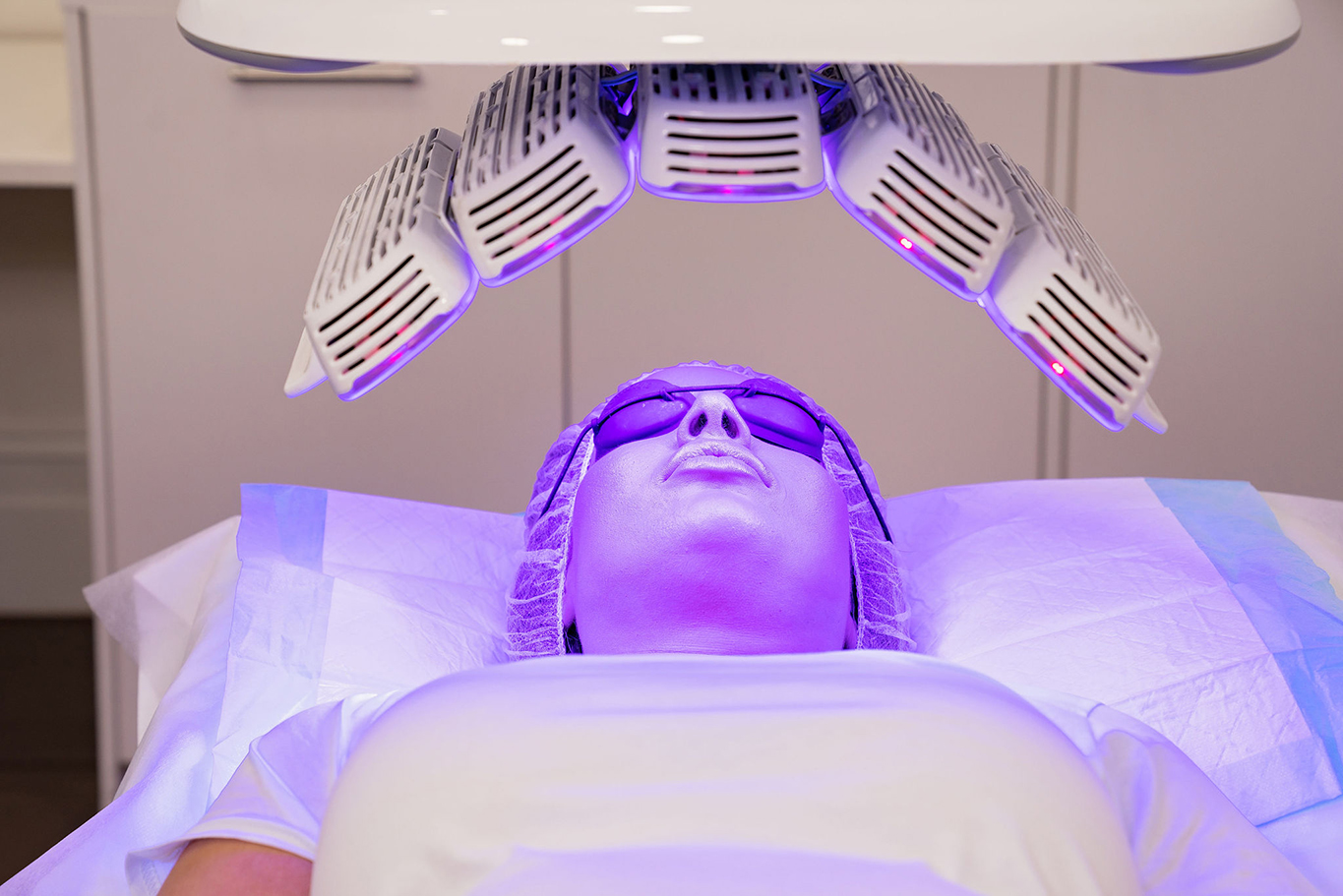
SPF still matters under grey skies, since UV doesn’t take winter off. LED light therapy can also help calm skin that’s turned reactive, without adding anything new into the mix, a gentle option if things feel more sensitive than usual.
Ceramides are worth checking for on the label too. They help rebuild the barrier itself, instead of just sitting on top of it the way a standard moisturiser does.

If it’s dehydrated skin
Dehydrated skin is temporary, and it comes down to water, not oil, so the fix works differently. A hydrating serum under your moisturiser gives your skin something to hold onto instead of just sealing in what’s already there, usually where a heavier moisturiser alone falls short.
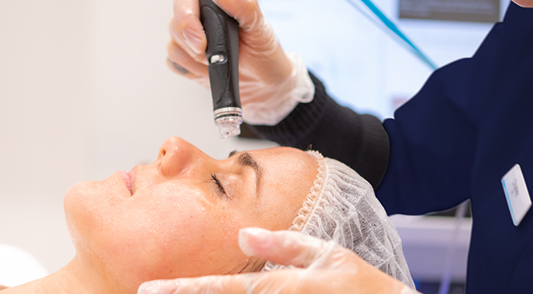
Applying both while your skin’s still slightly damp helps too, since the serum has something to lock in instead of evaporating straight off the surface. A HydraFacial suits a proper reset particularly well, replenishing hydration in one session with almost no downtime afterwards.
A cool mist humidifier overnight can help too, particularly in a bedroom that’s running the heater most nights. It’s a small thing, but it means your skin isn’t losing moisture to the air for eight hours straight.
When home care isn’t quite enough
Home care does most of the work, whichever one you’re dealing with. But sometimes a single treatment does more in one session than weeks of extra products, especially once your skin’s fallen properly behind. A proper consultation settles what’s going on instead of you working through a shelf of products alone.
A consultation usually means someone looking at your skin properly under decent light, asking a few questions about your routine, and telling you plainly whether a treatment’s going to help or whether you just need to stick with what you’re doing for a few more weeks.
Flaking or rough texture is usually the sign that a proper exfoliating treatment would do more than another scrub at home. Skin treatments like microdermabrasion clear away what’s built up in one session, rather than the slow smoothing you get from a home routine alone.
Why a proper look beats another product
This isn’t really about which product you pick next. It’s about whether someone’s actually looked at your skin, instead of handing you the same routine as everyone else regardless of what’s going on underneath, or what worked for a friend with completely different skin.
Every plan at Clear Skincare starts with a proper look at what your skin’s dealing with, dry, dehydrated, or both. Knowing which one you’re treating is what makes a routine work, not another product stacked on top.
Pricing’s upfront before you book anything, and there’s no pressure to walk out with a treatment plan if a consultation turns up nothing more than a product swap.
Book your winter skin check
If today’s about one clear concern, a consultation is the fastest way to find out whether it’s dryness, dehydration, or both, and what helps from here. A broader winter reset might suit you better if nothing here quite matched what you’re dealing with.
Either way, book a consultation while winter’s still giving your skin decent conditions to recover in. It only gets harder from here.
FAQs
How do I know if my skin is dry or dehydrated?
Shine is the simplest test: dehydrated skin often still looks shiny through the T-zone while feeling tight elsewhere, while dry skin feels the same everywhere. A consultation can confirm it if you’re still not sure, particularly if your skin’s never behaved quite like this before.
Is it normal for skin to get drier every winter?
Seasonal dryness is common. Cold air, lower humidity, and indoor heating all put pressure on your skin barrier every year, and how much it affects you comes down to your skin type and how well your routine holds up.
Can dry winter skin make other concerns worse, like pigmentation?
Dry skin doesn’t cause pigmentation on its own, but a strained barrier can make pigmentation that’s already there look more obvious. Supporting your barrier tends to make other concerns easier to manage as part of the same routine.
How long does it take for a hydrating routine to make a difference?
Most people notice some change within a couple of weeks of being consistent. If your skin’s still tight or uncomfortable after that, get a professional opinion on what it actually needs.
Do I need a HydraFacial, or can home care be enough?
For most people, a consistent home routine is enough to manage winter dryness on its own. A HydraFacial makes more sense when your skin needs a faster reset than your routine alone can give it.
Should I switch up my skincare routine completely for winter?
Most of your existing routine can stay the same. A few adjustments, like layering in a hydrating serum or moving to a richer moisturiser, are usually enough without replacing everything at once.